Staff sales | A second life for your goods in your own team

Staff sales through 2ECO

Give furniture a second life - through your own employees

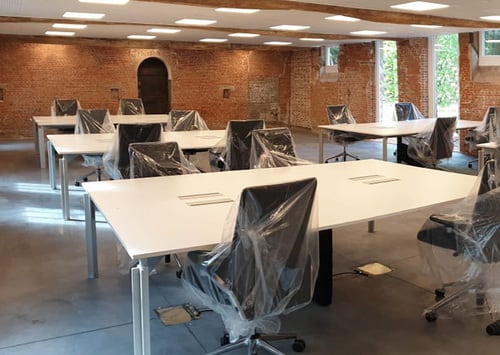
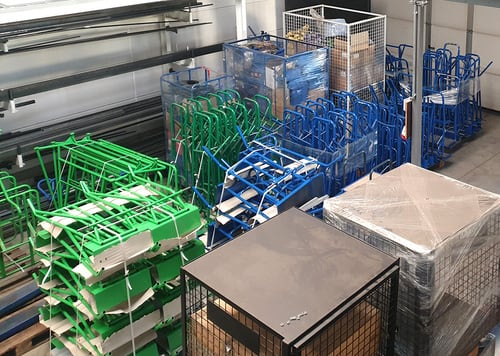
When companies redecorate, move or revamp an entire office environment, there is often quality furniture left behind that does not move with them.
2ECO offers companies the opportunity to offer this material first to offer this material to their own staff - through their own page on our website. This digital staff sale is an accessible and ecological way to give surplus resources a new life, within the company itself.

What is a staff sale?
A staff sale is a temporary, internal sale in which employees gain access to an exclusive supply of used furniture from their own organization.
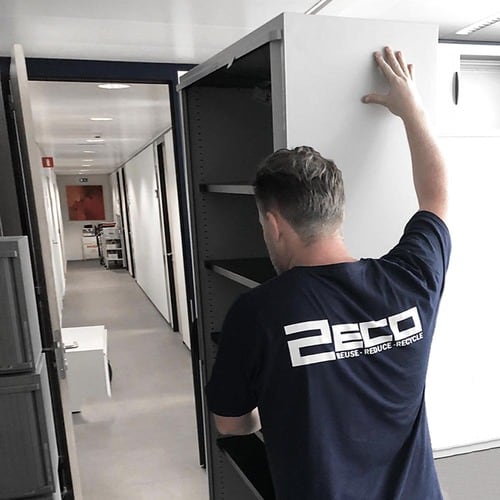
2ECO manages the entire process: from inventory to sales, payment, shipping or pickup. Employees can purchase the material at pre-agreed discounted employee prices - without the company's own administrative work.

How does it work?

1. The company decides to sell surplus furniture or equipment.
2. You create your own inventory or 2ECO inventories and selects the saleable goods for you.
3. We place all products in a protected webshop environment, accessible via a unique link with password.
4. Employees can view the offer and order items at favorable rates.
5. Payment, follow-up and logistics are handled by 2ECO.
6. Possibly extensive CO₂ and sales reporting upon completion.

Employees can choose between:
Free pickup at a set time at the company location
Home delivery at the end of the staff sale (at additional cost)

Contact us for a proposal
Image

Why is this of interest to your company?

First of all, your employees get a unique opportunity to purchase quality furniture, and you show yourself as an employer committed to sustainability, circularity and commitment. There are also numerous practical benefits:

For facility & operations managers:

🧾 No internal hassle - we take care of everything
🕒 Time savings - no emails, no follow-ups, no separate payments
🔒 Secure & transparent - through a secure web shop with reporting
📊 Overview afterwards - with optional report on what was sold, CO2 impact, residual value...

For sustainability officers and CSRD managers:

🌱 Ecologically responsible - furniture remains in use and does not need to be destroyed
♻️ Circular reporting - CO2 emissions, waste avoided, and material reuse are made transparent
💼 Social value - employees are given first access, which increases their involvement

Image

Case example

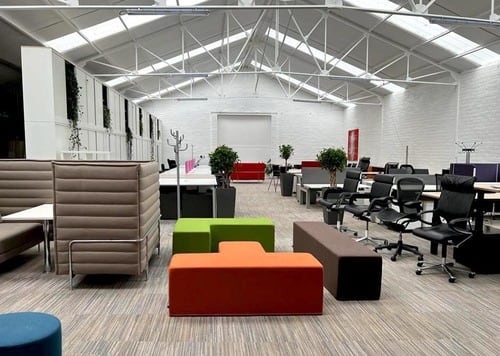
An organization decides to renovate an entire floor. The existing furniture is inventoried by 2ECO. For two weeks, employees get access to a personalized webshop with office chairs, pedestals, tables, acoustic screens and more.

Employees choose, pay and receive automatic confirmation. Some pick up their order during an internal pickup day, others have it delivered through 2ECO. The rest of the furniture is then taken over by 2ECO and processed through other 2ECO channels (auction, webshop, project furnishing). The result? A complete internal sale without administration for the company, with ecological and social return.

Interested? Contact us

Read more about our services

Service - Bedrijfsleegmaak, leegmaken van bedrijfspanden

Corporate Clearance

Service - Opkopen van bedrijfsgoederen, overstocks, kantoormeubilair, machines etc

Corporate asset buyout

Read more
Service - Hercirculeren, terug in omloop brengen van meubilair

Sales and Recirculation

Read more
Service - Bezemschoon opleveren van bedrijfspand

Broom clean delivery

Read more
Service - Refurbishing, heropwaarderen van gebruikt meubilair

Refurbishing

Read more
Service - Recyclage, verzorgen van afvalstromen

Recycling

Read more

2ECO Certificate | CO₂ analysis and reporting acquisition of goods and emptying project

2ECO Certificate

Full report and CO₂ analysis of your emptying project

With the 2ECO Certificate, you as a company demonstrate in concrete terms the sustainable impact you are making. It not only offers you insight into CO₂ savings and waste avoidance, but is also a valuable tool for your ESG or CSRD reporting. This way, you strengthen your sustainability story with measurable results.

If you choose to work with 2ECO to empty your business, we will provide you with a certificate and report of the entire project at the end if desired. Among the dates you will find in the report.

Certificate and reporting

The 2ECO Certificate includes a global overview of the number of goods acquired, the CO₂ emissions and the amount of waste avoided by reusing the goods or properly recycling them if unusable. So you not only get a sustainable solution, but also substantiated proof of circular added value.

In addition, you will receive a comprehensive report in which all figures are clearly explained and their interpretation is thoroughly detailed. This way you will know exactly what the impact of your project is and you can also include this information in your own sustainability reporting or communication for CSRD, ESRS and several more reports.

In addition, you will also receive a:

Detailed takeover list with an overview of the goods taken over: types, numbers, takeover amount, etc.
Circularity overview with positive impact: listing of avoided carbon emissions, weights and volumes of all reused goods.

Specified expense list including costs for transportation, waste disposal, ladder elevator rental, logistics support, etc.
CO₂ analysis per operation: overview of emissions (such as transportation) and CO₂ gains (such as recycling or reuse) for all steps within the project

All figures in the certificate are based on our own research and reliable data from recognized research institutions. Thus, you are assured of a substantiated and transparent report, tailored to the reality of your project.

More on the calculation methodology
Request a free valuation

Circularity (numbers)

2ECO guarantees that all goods collected from your company are put back into circulation in a responsible and circular way or, where reuse is not possible, are recycled to the maximum extent possible. Thus, together we contribute to a more sustainable and waste-free future.

The products acquired by 2ECO are directly reused or, if necessary, repurposed for a second or even third life after refurbishing or material repair. In this way, we reduce the need for new production and save on the consumption of scarce raw materials. Goods that are no longer reusable are dismantled into spare parts to upgrade other products. In this way, we are jointly committed to maximum reuse and a circular future!

More about how and which goods we buy up
How we put products back into circulation
Refurbishing as an ecological alternative

Waste Reduction (in tons)

By adopting and reusing these goods, we avoid not only the need for new production and scarce resources, but also the dumping of large amounts of waste in landfills.

In addition, 2ECO optimizes waste streams and ensures maximum recycling of materials. Thus, we actively contribute to the circular economy and reduce waste and wastage to an absolute minimum. Together, we make a difference!

Waste reduction through direct reuse - Goods that can be reused in their entirety. And secondly:
Waste reduction through recycling - Goods or materials that are not directly reusable, but are properly recycled and thus serve as new raw materials instead of becoming waste in landfills.

Learn more about how we recycle correctly

Avoided emissions (in tons of CO₂ equivalent).

Global Warming Potential (GWP) is a measure that expresses the impact of greenhouse gases on global warming. It indicates how much heat a particular gas retains in the atmosphere over a given period of time (usually 100 years) compared to carbon dioxide (CO₂), which serves as a reference. So here we are talking about GWP neg (negative Global Warming Potential, also called avoided emissions or CO₂-savings): The avoided CO₂ emissions from reusing products instead of producing new ones and proper recycling that saves raw materials, energy and production emissions.

By giving your goods a second life, we avoid the entire chain of carbon emissions associated with the production of new goods. This includes the mining of raw materials, production processes, transportation and packaging.
In addition, proper sorting and recycling of the various waste streams also contributes to a reduction in CO₂ emissions. Recycled material is reused as a new raw material after processing or, if reuse is not possible, incinerated for energy production. This largely avoids the need to mine, process and transport primary raw materials.
Check out our science-based calculation methodology

Produced emissions (in tons of CO₂ equivalent)

Of course, the implementation of this project also involves CO₂ emissions, GWP pos (positive Global Warming Potential): the emitted CO₂ or greenhouse gas emissions resulting from the project, such as transportation, refurbishment or other operations. Thus, these come mainly from the transportation of personnel, goods and waste, as well as any delivery of ladder elevators, forklifts or other machinery. 2ECO strives to keep these emissions as low as possible by:

- Optimize transports and plan trips more efficiently.
- Load trucks to the maximum, minimizing the number of trips.

In this way, we limit our ecological impact and stay true to our circular and sustainable mission.

How we calculate and substantiate the figures

Financial settlement

In addition to the environmental impact of this project, there is also a financial benefit associated with the circular disposal of your furniture. By buying up your surplus goods, some or even all of the expenses of the clearance, transportation and logistics movements can be offset. We will provide you with a global view of the costs incurred and the value of the furniture acquired, giving you a clear picture of the net financial impact of this project.

Your corporate emptying with 2ECO
Contact us for a free quote

Read more about our services

Service - Bedrijfsleegmaak, leegmaken van bedrijfspanden

Corporate Clearance

Read more
Service - Opkopen van bedrijfsgoederen, overstocks, kantoormeubilair, machines etc

Corporate asset buyout

Read more
Service - Hercirculeren, terug in omloop brengen van meubilair

Sales and Recirculation

Read more
Service - Bezemschoon opleveren van bedrijfspand

Broom clean delivery

Read more
Service - Refurbishing, heropwaarderen van gebruikt meubilair

Refurbishing

Read more
Service - Recyclage, verzorgen van afvalstromen

Recycling

Read more

Methodology | Scientifically based calculation method | CO₂ reporting and 2ECO certificate

Impact calculation life extension

1. Overview and location of the study.

1.1. Sustainability project overview

Collection, refurbishment and (re)sale of office furniture is an important part of 2ECO's business model. Companies can rely on them to reuse their discarded office furniture in a sustainable way, avoiding material destruction. To further develop this business model, it is important to give customers insight into the positive environmental impact of reuse and refurbishment. Within this project, we want to make this positive impact measurable, so that the effect of the efforts is made measurable. When we can measure it, we can track it over time, and communicate and report on it in an informed way.

To enable this impact communication, a number of crucial data points are captured for each product category. A first key data point is the amount of waste avoided, expressed in the number of kilograms that do not end up in landfills. This gives companies direct insight into the amount of materials that get a new purpose through reuse and thus are not processed as waste. This information helps them understand the positive contribution their decision has on the environment and highlights the benefits of partnering with 2ECO. A second essential data point is the Global Warming Potential avoided. This shows the negative impact avoided by avoiding the production of new material. Here we also take into account the environmental impact of reuse, such as, for example, environmental impact of transportation, repair and replacement.

We also critically examine our own operations and continuously look for ways to reduce our carbon emissions and strengthen our sustainability strategy. 2ECO is a member of the Belgian Chamber of Removers (BKV) and actively participates in a process in which the industry is working on a uniform approach to the Corporate Sustainability Reporting Directive (CSRD). As a result, we are helping to build a standard materiality inventory for the moving and buying industry. This not only enables us to comply with future legislation, but also to communicate more transparently about our impact and better support customers in their own sustainability goals.

1.2. Situation of the research

This research stems from a double motivation: on the one hand the intrinsic motivation of 2ECO BV to put circular economy and life extension at the center of its business strategy, on the other hand the support within the framework of the VLAIO grant & funding: Circular Manufacturing Industry - Life Extension.

This combination of entrepreneurial-driven innovation and science-based methodology allows us not only to optimize our own processes, but also to contribute to the broader transition to a circular economy. This research allows us to develop practical insights, generate measurable impact and substantiate the effectiveness of life extension as a sustainable strategy.

1.2.1. VLAIO - Circular Manufacturing: Life Extension

This call allowed broad and diverse partnerships to apply for funding for a pilot project on life cycle extension in the manufacturing industry. The project had to contribute to the Flemish ambition to evolve towards a circular economy. The Flemish Energy and Climate Plan sets the ambition to reduce our material footprint by 30% by 2030 and to drastically reduce our greenhouse gas emissions by 2030.

More info at VLAIO.be

1.2.2. Project: Circular furniture from offices to wider audiences

With the project "Circular furniture from offices to wider target groups, in the bisector lies the added value of less material", 3 project partners are looking for a strategy to adapt, repair, reshape and redistribute the residual flow and bought-up furniture from offices to wider target groups, engaging in a collaboration that integrates both the logistics chain, customization and a design process to further refine the circular use of materials and parts in a cross-fertilization between designers and companies in the social and circular economy. By redesigning the also difficult to reuse furniture pieces and/or parts, a very limited waste stream remains and the objects can be offered again for furnishing offices, companies and schools.

With this pilot project, the partners wish to increase the efficiency of stock management and reduce waste streams by thinking creatively about new uses and result in a generic collection of "upcycled" furniture and objects for flexible and modular use.

Image
Image

Left: Overview diagram positioning project / Right: project phasing and partners

The 3 partners engage in this collaboration from their own expertise, with 2ECO providing the influx of office furniture and business materials, cuypers&Q architects working with the residual products from a design process and De Brug as a customization company.

Summary of the project on VLAIO.be

2. Partners in research

2.1. 2ECO BV

2ECO BV is a specialist in emptying, buying up and reusing office furniture and business equipment. With a strong focus on circular economy and sustainability, 2ECO brings discarded goods back into circulation through buyback, refurbishing and sales. By partnering with companies and organizations, 2ECO actively helps reduce waste and carbon emissions, with the goal of more sustainable use of existing materials.
www.2eco.be

2.2. Cuypers & Q architects BV

Cuypers & Q architects are (interior) architects who think creatively about new possibilities and forms. They integrate circular thinking into their designs and are committed to circular school construction and interior design. For example, they have developed the "Guide to a Circular School Building," a hands-on guide that provides policymakers, clients and school boards with the tools to realize circular ambitions. They are also working on projects such as the Village School Vremde, a pilot project for the Green Deal Circular Building, which integrates circular solutions.
www.cuypers-q.be

2.3. De Brug vzw - Bespoke company

The Bridge is a custom work company that has been providing suitable employment for people with recognized distances from the labor market since 1973, with particular attention to persons with mental disabilities. With expertise in wood and metalworking, painting and upholstering, they have extensive experience in processing and reworking existing furniture and objects.
www.debrug.be
Image

Overview chart positioning of project partners

2.4. This research was conducted by SURA Impact

SURA is a sustainability agency founded in 2020 with the goal of supporting companies on their path to sustainable business practices. We believe that companies play a crucial role in the transition to a sustainable economy because these organizations bring together innovation, people and technology. We are committed to working closely with employees, customers and other stakeholders to realize joint, supported solutions that contribute to a better future.
Within this study, SURA developed the methodology, collected the data and performed the analysis. Which was then further completed and extended by 2ECO.

www.sura-impact.be

3. Motivation and commitment

3.1. Transparent Reporting & Continuous Improvement from 2ECO

Because reporting on environmental impact and circularity is still in its infancy, we are actively working with various partners and experts to obtain as complete a picture as possible. Our goal is to eventually arrive at an unambiguous and standardized method for reporting the environmental impact of reuse and refurbishment.

At 2ECO, we take our responsibility in this evolution and are committed to continually expanding and refining our data. By integrating new insights, accurate measurements and advanced analytical methods, we ensure that our numerical data becomes ever more reliable and transparent.

We strive for honesty and clarity in communication so that our customers and partners can trust the data we provide. This enables them to make informed, sustainable choices and better understand and justify the environmental impact of their decisions.

Our commitment to accurate and science-based reporting not only adds value for our clients, but also contributes to the broader transition to a circular economy with measurable impact.

3.2. Sustainability track BKV & The Ecological Entrepreneur

In addition, 2ECO is a member of BKV (Belgian Chamber of Removers) and is participating in a project to determine, together with the other participants, what is important for our sector with regard to the Corporate Sustainability Reporting Directive (CSRD) and what objectives we as a sector can set by:

  • Mapping the "material topics" for BKV-CBD in line with mandatory regulations to create a "standard level" within the industry.
  • Defining the approach for sustainability reporting (mandatory and voluntary) within the sector with an IndividualCarbon Analysis per company, as a basis for own reporting to customers & suppliers, banks and develop a strategy with focus on sustainability reporting, reduction ofCO2 emissions and overall sustainability aspects (ESG) of the organizations
  • Training program, where we learn to work on our own sustainability reporting.
  • The Ecological Entrepreneur proposes an approach to help BKV-CBD develop a standard materiality inventory for the industry to comply with upcoming legislation (primarily CSRD). Achieving this standard inventory requires an understanding of the business activities, value chain andcarbon emissions of companies in the moving industry

3.3. Own commitment within 2ECO

At 2ECO, we attach great importance to sustainability and corporate responsibility. Therefore, we ensure that our own operations are fully aligned with CSRD and ESG criteria. We have had our CSRD report professionally prepared, transparently reporting on our environmental impact, circular strategies and social responsibility.

In addition, we continuously scrutinize our own processes and continue to actively seek ways to optimize our impact and make them more sustainable. By investing in data analytics, more efficient workflows and innovative reuse methods, we not only continue to meet reporting requirements, but also take ever new steps toward fully circular operations.

4. Methodology

4.1. Determine data points for 2ECO's products.

Both when buying and selling used office furniture, 2ECO aims to clearly communicate the environmental impact to the customer. Depending on the type of customer, specific data points are calculated to provide insight into waste savings and CO₂ emissions. This transparent impact communication not only helps customers make conscious, sustainable choices, but also reinforces their corporate social responsibility (CSR) efforts.
Image

Overview chart of business movements 2ECO and the information to be provided

4.1.1 Indicators for professional clients

For professional clients, the following indicators are relevant to report and communicate about:

Avoided emissions (in kg CO₂ equivalent).

The European Sustainability Reporting Standards (ESRS) are the sustainability reporting guidelines within the Corporate Sustainability Reporting Directive (CSRD), which requires companies to report more transparently on their environmental, social and governance (ESG) impacts.

Reporting can be done under ESRS E1 climate change category, more specifically, ESRS E1.2. which focuses on avoided carbon emissions and climate impact.

This reporting requirement requires companies to report on:

  • Reduced greenhouse gas emissions (CO₂ equivalents) by adopting sustainable strategies such as reusing, refurbishing and recycling.
  • The impact of business activities on climate change, including how their products and services contribute to emissions reductions.
  • How these emission reductions relate to EU targets and the Paris Agreement.

Glossary 1: Global Warming Potential (GWP) is a measure that expresses the impact of greenhouse gases on global warming. It represents how much heat a particular gas retains in the atmosphere over a given period of time (usually 100 years) compared to carbon dioxide (CO₂), which is used as a reference.

Why is GWP important?
GWP helps us understand how harmful something is to the climate, compared to CO₂. It allows us to compare different greenhouse gases, such as methane (CH₄) or nitrous oxide (N₂O). A higher GWP means that a gas contributes more to global warming. For example:

  • CO₂ has a GWP of 1.
  • Methane (CH₄) has a GWP of about 28-36.
  • Nitrous oxide (N₂O) has a GWP of about 265-298.

Glossary 2: Kg CO₂ Equivalent (kg CO₂ eq) is the unit in which GWP is expressed. It represents the impact of different greenhouse gases as an amount of CO₂ that has the same warming potential. For example: An emission of 1 kg of methane converts to 28-36 kg of CO₂ eq, depending on the time horizon.

Waste reduction (in kg)

Waste reduction can be reported under Corporate Sustainability Reporting Directive (CSRD) reporting for European Sustainability Reporting Standard (ESRS) E5.2: Resource use and Circular Economy.

ESRS E5 focuses on resource utilization and circularity, and ESRS E5.2. specifically on waste reduction and reuse. This includes:

  • Measurement and reporting of waste streams, including how much waste is prevented, reused, recycled or disposed of.
  • The strategies a company employs to promote waste reduction and circularity within its production and business processes.
  • How these strategies contribute to sustainable resource management and circular economy goals within the EU.

4.1.2 Indicators for companies active in office furnishing

For companies active in office furniture (category 2), there are some additional data points that may be important because these companies can include this in their sustainability report, for example. These companies can use the following overview with relevant reporting options:
CSRD & GRI Tabel
CSRD
ESRS E1
CSRD
ESRS E5
EU Taxonomy (do no significant harm)GRI 306
Cat 1
  • E1.2 klimaatverandering mitigatie
  • Vermeden uitstoot in kg CO₂e

  • E1.3
    minder energieverbruik
  • Energie reductie in kWh
  • E5.2
    Grondstof gebruik verminderen
  • Grondstof besparing in kg per soort

  • E5.3
    Afval vermijden
  • Afvalvermindering in kg
Sale of second-hand goods (onder NACE C31: Manufacture of furniture) GRI 301: Materialen
  • GRI 301-2: Percentage gerecyclede inputmaterialen gebruikt in het productieproces (dit kan ook uitgebreid worden naar tweedehands goederen, zoals meubels).
GRI 306: Afval
  • GRI 306-2: Gewicht van het geproduceerde afval, verdeeld per type (bijv. door de aankoop van tweedehands meubels wordt afval vermeden dat zou zijn gegenereerd door de productie van nieuwe meubels).
  • GRI 306-3: Significante hoeveelheden afval dat hergebruikt, gerecycled of op een andere manier verwerkt wordt.
Cat 2IdemIdem//
CSRD & GRI Tabel
CSRD
ESRS E1
CSRD
ESRS E5
Cat 1
  • E1.2 klimaatverandering mitigatie
  • Vermeden uitstoot in kg CO₂e

  • E1.3
    minder energieverbruik
  • Energie reductie in kWh
  • E5.2
    Grondstof gebruik verminderen
  • Grondstof besparing in kg per soort

  • E5.3
    Afval vermijden
  • Afvalvermindering in kg
Cat 2IdemIdem
CSRD & GRI Tabel
EU Taxonomy (do no significant harm)GRI 306
Cat 1Sale of second-hand goods (onder NACE C31: Manufacture of furniture) GRI 301: Materialen
  • GRI 301-2: Percentage gerecyclede inputmaterialen gebruikt in het productieproces (dit kan ook uitgebreid worden naar tweedehands goederen, zoals meubels).
GRI 306: Afval
  • GRI 306-2: Gewicht van het geproduceerde afval, verdeeld per type (bijv. door de aankoop van tweedehands meubels wordt afval vermeden dat zou zijn gegenereerd door de productie van nieuwe meubels).
  • GRI 306-3: Significante hoeveelheden afval dat hergebruikt, gerecycled of op een andere manier verwerkt wordt.
Cat 2//
In addition, there are also some standards/certifications within the construction industry that use these data points so they can be used there as well. (BREEAM, WELL)

BREEAM (Building Research Establishment Environment Assessment Methodology).

  • MAT 1: Life cycle impacts: 5 BREEAM points are available for items that are reused on site. Furniture is included as one of the potential elements that can be reused.
  • Wst 01: Project Waste management: encourages projects to promote resource efficiency. Projects receive credits for minimizing the amount of waste generated per 100 m2, including furniture.
  • Sustainable procurement: rewards projects that purchase more sustainable products and services according to a sustainable procurement plan

WELL Building Standard (health and well-being of people).

  • Furniture: concept Movement: The movement concept is designed to promote physical activity and ergonomic comfort.
  • Q02: Visual and physical ergonomics
    • Support Visual ergonomics (adjustable screen height).
    • Ensure Desk height flexibility (adjustable desk height)
    • Ensure Seat flexibility (adjustable office chairs)
    • Provide standing support (standing chair, crutches)
    • Provide ergonomics education
  • Q07: Active Furnishings (sit-stand desks, dynamic workstations)
www.wellcertified.com

4.2. Determining the product categories

The product categories were taken from the existing product categories as defined and used by 2ECO. When selecting, a conscious choice was made to include the most common products in the secondhand and refurbishment market, with the aim of making the analysis as complete and representative as possible.

The chosen product categories offer the best references and provide the most valuable insights and results for the impact calculation. By focusing on these categories, we can capture the carbon savings and environmental impact of reuse and refurbishment in an informed and measurable way. The product categories included in this study are:

CSRD & GRI Tabel
Kasten
Opbergen
Bureaus
Tafels
ZitmeubilairKantoor
Inrichting
IT-Elektrificatie
  • Roldeurkast
  • Schuifdeurkast
  • Draaideurkast
  • Locker
  • Ladeblok
  • Ladekast
  • Bureau
  • Workbench 2p
  • Workbench 4p
  • Zit-Sta bureau
  • Vergadertafel
  • Kantinetafel
    kantelbaar
  • Kantinetafel
    vaste voet
  • Bijzet- en salontafel
    hout en glas
  • Tafel- en bureaublad
  • Bureaustoel
    kunststof voetkruis
  • Bureaustoel
    alu voetkruis
  • Ontvangststoel
    vergaderstoel
  • Ontvangststoel
    stoffen kuipstoel
  • Kantinestoel
    kunststof
  • Kantinestoel
    metaal+kunststof
  • Banken/salons/zetels
    houten chassis
  • Banken/salons/zetels
    metalen chassis
  • Krukken/Barkrukken
  • Treinbanken
  • Privacybooths
    belcellen
  • Ruimtescheiders
    tussenpanelen
  • Staan- Hang- en
    Bureaulampen
  • Kapstokken
    kleerhangers
  • Monitors
    Beeldschermen
  • Printers
    scanners
    copiers
CSRD & GRI Tabel
Kasten
Opbergen
Bureaus
Tafels
Zitmeubilair
  • Roldeurkast
  • Schuifdeurkast
  • Draaideurkast
  • Locker
  • Ladeblok
  • Ladekast
  • Bureau
  • Workbench 2p
  • Workbench 4p
  • Zit-Sta bureau
  • Vergadertafel
  • Kantinetafel
    kantelbaar
  • Kantinetafel
    vaste voet
  • Bijzet- en salontafel
    hout en glas
  • Tafel- en bureaublad
  • Bureaustoel
    kunststof voetkruis
  • Bureaustoel
    alu voetkruis
  • Ontvangststoel
    vergaderstoel
  • Ontvangststoel
    stoffen kuipstoel
  • Kantinestoel
    kunststof
  • Kantinestoel
    metaal+kunststof
  • Banken/salons/zetels
    houten chassis
  • Banken/salons/zetels
    metalen chassis
  • Krukken/Barkrukken
  • Treinbanken
CSRD & GRI Tabel
Kantoor
Inrichting
IT-Elektrificatie
  • Privacybooths
    belcellen
  • Ruimtescheiders
    tussenpanelen
  • Staan- Hang- en
    Bureaulampen
  • Kapstokken
    kleerhangers
  • Monitors
    Beeldschermen
  • Printers
    scanners
    copiers

4.3. Establish reference products by product category & data research

Because we work with used and refurbished goods for which there is often no Environmental Product Declaration (EPD), we cannot directly take information. Therefore, we record several reference products for each product category. For each reference product, the necessary information is extracted from the EDP. Based on these reference products, we can calculate average values, which can then be applied to entire product categories. In addition, we recalculate these values for subcategories or at the product level, taking weight into account for an even more accurate impact analysis. Currently, these calculations have been implemented on +400 subcategories. As more numerical data becomes available in the future (usable EDPs), these data will be further optimized and refined so that we can provide increasingly accurate and informed insights.

The EPD displays all information about the product (such as info about the producer, construction, use of materials, etc.) and also reports the results of the life cycle assessment (LCA) performed by the producer.

In LCA analysis, the environmental impact of a product is reported on several categories (which exactly depends on the standard being reported on). Global Warming Potential (GWP) is 1 of these impact categories, expressed in kg CO₂ eq.

4.4. Fill in data points

Next, we are going to fill in the data points: Global Warming Potential (in kg of CO₂ eq.), Resource Saving (in Kg) and Waste Reduction (in Kg) using the available data.

4.4.1. Global Warming Potential (in kg CO₂ eq.).

The avoided environmental impact is calculated by offsetting the environmental impact of the reference product (as described in the EPD) with the impact of the refurbishment actions and transportation. Specifically, the total impact of a new product, as shown in the EPD, is reduced by the environmental impact of the refurbishment actions and transportation of the refurbished product. The result is the average avoided impact, or the amount of carbon emissions and waste avoided by choosing a refurbished product over a new product.

This process provides a clear understanding of sustainability gains. By avoiding the entire production chain of a new product - such as raw material extraction, manufacturing and distribution - the environmental impact is significantly reduced. The refurbishment process generates only a fraction of the original impact, and with reuse without processing, there is virtually no additional environmental impact, resulting in substantial savings.

When purchasing multiple reuse products, the different impact categories can be added up to determine the overall result of the project. In an entire office fit-out project using only reused office furniture, the cumulative avoided impact can quickly add up. This makes reuse not only a financially attractive option, but also a powerful step toward a circular economy.

The following sections provide an overview of how the various data points are completed.

Determine amount of emissions avoided (in kg CO₂ eq.).

When conducting life cycle analysis, the impact of the product is classified by stage in the life cycle.

Image

The different phases of a product's life cycle

Depending on the standard, we work with the phases upstream - core - downstream, or the phases A1-3 (product stage) & A4-A5 (construction stage) & B1-B7 (use stage) & C1 - C4 (end of life stage) & D (other supplemetary information).

Image

Table: reporting according to upstream-core-downstream model

Image

Table: reporting according to EN15804 modules

This makes it difficult to make comparisons between different reporting methods, as the different reporting options cannot be matched 1 to 1, as seen in the table below
Image

Table: mapping the impact stages

However, when implementing 2ECO's business model, the transition is made from one user phase to the next user phase. The intermediate phases (as seen in the diagram below) are replaced by transportation, possible repair and material replacement. This skips 4 of the 5 phases of the life cycle, with the exception of the use phase. However, for non-electrical devices, the impact in this phase is minimal. This allows us to work with the full amount of declared Global Warming Potential for non-electrical goods.

For electrical goods, however, the GWP of the user phase is excluded from the impact calculation, as it can have a significant impact on the result.

Image
Skipping certain phases of the life cycle when applying 2ECO's business model
Determine amount of added emissions (in kg CO₂ eq.).

A good example is the refurbishment of an office chair. For this category, the most common actions are:

  • Re-upholstering the seat and back: This can be done in a color of the customer's choice, giving a personal touch to the refurbished product. Replacing the upholstery helps renew the look and comfort of the chair.
  • Replacing the wheels: Here the customer can choose hard or soft wheels, depending on the type of floor on which the chair will be used. This is a relatively simple but effective way to improve the functionality of the chair.
  • Full mechanical check-up: This involves checking all mechanical parts and repairing or replacing them if necessary. Consider the height adjustment, backrest, armrests and other adjustable features that determine the ergonomics and comfort of the chair.

In addition to refurbishment actions, transportation can also be included in the total environmental impact of a refurbished product. For customers of the webshop, transport is not taken into account. For customers where materials are picked up, the impact of this transport is custom calculated.

Transportation includes both moving the furniture from its original location to 2ECO's workshop and delivering the refurbished product to the customer.

4.4.2. Raw material savings (in kg)

The amount of raw materials used per product is always stated in the Environmental Product Declaration (EPD). If this information is not included in the EPD, it was requested directly from the supplier.

These values were then recalculated by subcategory (more than 400 in total), using the minimum and maximum weights of products within each subcategory. On this basis, we calculate a representative average weight, which serves as a basis for further impact analyses.

4.4.3. Waste reduction (in kg)

Ditto resource savings:

The amount of material used per product is always stated in the Environmental Product Declaration (EPD). If this information is not included in the EPD, it was requested directly from the supplier.

These values were then recalculated by subcategory (more than 400 in total), using the minimum and maximum weights of products within each subcategory. On this basis, we calculate a representative average weight, which serves as a basis for further impact analyses.

4.4.4. Volume of waste avoided (in m³)

We have since collected a wealth of information in our own product database, including the dimensions of every product ever processed through 2ECO. Based on this data, we have determined the average width, depth and height for each product subcategory.

These dimensions were then offset by a coefficient depending on how much space the product effectively occupies when stacked optimally. This allows us to realistically and substantively estimate how much volume a particular furniture category represents within a project.

4.5. List of reference products

The overview includes all product categories, subcategories and the corresponding products investigated. For each product examined, the Environmental Product Declaration (EPD) is available. This declaration contains detailed information about the product, including manufacturer data, construction, material use, and the results of the life cycle assessment (LCA) performed by the manufacturer.

All relevant data have been carefully filtered and compiled in a table, on which the calculations for each product category are based. This comprehensive list of reference products, associated SPDs and additional information is available for review at our office.

Contact us for an appointment

5. Additional data for project calculations.

5.1. Transport calculations (in kg CO₂ eq./tkm or kg CO₂ eq./km)

  • For transportation, we use WTW emissions: these are all greenhouse gas emissions released during the production, transportation, processing and distribution of the fuel burned by the vehicle. Well-to-wheel emissions can be divided into:
    • Well-to-tank (WTT) emissions - The emissions generated during the extraction, refining and distribution of fuel to the vehicle's tank.
    • Tank-to-wheel (TTW) emissions - The emissions released during the combustion of fuel in the vehicle.
    • Note: Well-to-wheel emissions exclude emissions from vehicle production as well as non-exhaust-related emissions, such as brake or tire wear.
    • We use the WTW emissions because, as with the corporate goods, they provide the most complete picture from raw material extraction, production to the consumption phase.
  • For loads where weight is very variable or very important we use CO₂e/ton-kilometer. I.e., the CO₂e emissions to move 1 ton of cargo over 1 km, the emission figures used depend on the type of vehicle and the type of cargo (e.g., a 2 ton load over 100km will thus be noted as 2x100 x CO₂e/tkm coefficient).
  • For other transports, we have already processed the average weight and thus only CO₂e/km is calculated.
  • We use the figures of"light transport" (approximately < 0.4 kg/liter in cargo hold) for furniture and equipment transports.
  • For waste transport, we use the figures of"medium transport" (about 0.4-1.3 kg/liter in cargo hold). The reason for this breakdown is that the same vehicle in a light transport application is more poorly utilized in terms of weight, leading to higher CO₂ emissions per ton-kilometer.
  • We also use WTW emissions for electric vehicles, and the average kWh consumption/km is offset against the average CO₂ emissions/kWh associated with electricity generation in Belgium.

All the exact figures on which our calculations are based have been compiled in a table. This table with all sources and references to studies and additional information is available for inspection at our office.

Contact us for an appointment

5.2. Waste and recycling (in kg and kg CO₂ eq.)

The proper sorting and recycling of the various waste streams helps to reduce CO₂ emissions. Recycled material is reused as a new raw material after processing or, if reuse is not possible, incinerated for energy production. This largely avoids the need to mine, process and transport primary raw materials.

To allow a fair comparison between recycling and incineration, both include avoided emissions. Incineration involves avoided emissions from energy generated; this avoids conventional electricity and heat generated from natural gas. Recycling involves avoided emissions from recyclates obtained, which avoids primary material production.

All the exact figures on which our calculations are based have been compiled in a table. This table with all sources and references to studies and additional information is available for inspection at our office.

Contact us for an appointment

5.2.1. Explanation

Calculations in recycling

In recycling, the CO₂ gain from reusing raw materials is always offset against the emissions caused by the recycling process itself. These calculations already include those process emissions.

The result shown thus shows the net CO₂e effect of recycling: a balance that includes both the climate gain from material recovery and the impact of the recycling process itself.

Combustion calculations

The CO₂ balance for incineration with energy recovery is determined by two factors: The CO₂ emissions from the material itself when burned and the avoided emissions from the energy generated, which would otherwise be produced through fossil (gray) sources. Thus, the net climate impact of incineration depends heavily on the type of material:

  • Materials with high CO₂ emissions and low energy value (plastics such as Polyamide and Polyurethane) provide relatively little energy recovery and therefore end up with a positive CO₂ balance (i.e. climate-damaging).
  • Materials with lower CO₂ emissions and high energy yields (such as wood and even plastics like Polypropylene) can be considered CO₂-neutral or even CO₂-negative in some LCA approaches. This is especially the case when combustion replaces fossil energy sources.

Keep in mind that although some materials may exhibit a negative or neutral CO₂ balance when burned with energy recovery, this still means:

  • the material is lost,
  • no raw materials are retained for reuse or recycling
  • Even if the CO₂ gain from energy recovery appears positive in the numbers, it is a one-time gain, while material reuse can yield CO₂ gains multiple times.
  • There may be renewed demand for virgin materials, causing new carbon emissions upstream.
Right perspective
It is important to keep things in perspective. Although proper recycling leads to CO₂ savings in many cases, reuse is always preferable because the CO₂ gain from reuse is significantly greater. How much more efficient reuse is compared to recycling or incineration depends very much on the materials used. We explain this with some examples in section 5.3.

5.2.2. Wood waste

Although wood burning produces greater avoided carbon emissions than recycling in some LCA calculations, this is mainly due to the relatively low avoided impact attributed to wood recycling. Indeed, recycled wood replaces virgin wood chips, avoiding only the emissions associated with their production - a process with limited climate impact.

At the same time, LCA rules assume that CO₂ emissions from burning wood do not cause a net increase in atmospheric CO₂, since the trees have previously absorbed this CO₂ from the air. As a result, the climate impact of wood burning is often considered neutral in analyses.

Yet this approach is not uncontroversial. There is increasing criticism of the calculation rules surrounding biogenic CO₂. In practice, burning wood does release CO₂, while recycling still temporarily stores that biogenic CO₂. This advantage of recycling, and disadvantage of incineration, is currently not correctly reflected in LCA results. In addition, wood recycling, starting from biotic sources, helps avoid other environmental impacts, such as those linked to forestry, land use and biodiversity.

Another important point is that wood can, in principle, be recycled several times. Each cycle again provides climate gains. Ultimately, the wood can still be burned, but after several use cycles. By burning immediately, that potential added value is lost after only one cycle.

For this reason, we consider wood recycling a clearly more favorable option than direct burning. It maximizes material value as well as climate gain over multiple life phases, although so this will not directly reflect in the figures.

Wood waste TYPE A (recycling)

This includes full wood, plank wood, e.g. pallets etc. Before shredding and pressing, this wood is first additionally sorted for faults and other residual materials after which it is pressed and reused as board material.

We always assume recycling in our calculations for Type A wood valleys.

Wood waste TYPE B (incineration)

This includes most desktops, formica, particleboard, wood joints with glue, etc. This material is mainly used as fuel for energy generation.  

Thus, we always assume combustion for energy generation in our calculations for Type B wood trap.

5.2.3. Metal Scrap

Can be recycled up to 100% after sorting. Can be remelted for use as new metal applications.

CO₂ emissions for metal recycling were calculated based on the total scrap metal collected netted against

  • total emissions for transportation and processing (recycling) of the scrap metal
  • emissions avoided because the metal is recycled, thus avoiding the need for new raw materials.
  • we use global figures here according to the proportion in which the different types of metal (upper steel, lower steel, aluminum, stainless steel, etc) are recycled each year.

5.2.4. Glass waste

Glass recycling results in both higher emissions and higher avoided emissions than glass incineration.

  • Because of the large amount of emissions avoided in the production of new glass, recycling glass ultimately results in a net negative climate impact. In other words, recycling glass avoids more emissions than it causes itself, making a net positive contribution to the climate.
  • The climate impact of burning glass is positive (i.e., burdensome) because burning glass does not avoid emissions. After all, glass is not combustible, so it does not produce energy in the way that wood or plastic might. Therefore, the emissions attributed to glass when incinerated come entirely from the transportation and energy consumption of the incinerator itself. As a result, glass contributes to total carbon emissions at the incineration stage with no avoided environmental gain.

With glass, we always assume recycling because this is also the most common technique when the glass has already been sorted. (Incineration is more likely when the glass ends up in residual waste).

5.2.5. Residual waste

Residual waste will be entirely incinerated to generate energy. This of course releases CO₂, but these emissions are still lower than those from gray electricity generation (based on fossil fuels, taking into account emissions from mining, transport and emissions produced during combustion).

  • Net CO₂ impact: When both direct CO₂ emissions and avoided emissions from energy recovery and are included, net CO₂ emissions can be significantly reduced. In some cases, the avoided emissions almost completely offset the direct emissions, depending on the efficiency of the incinerator and the composition of the waste.
  • We are not comparing this with the disposal of residual waste. If we were to include the greenhouse gases (mainly methane) released by landfilling residual waste, the figures would look much more positive, but since this is less and less common in Belgium (in Flanders, less than 2% of waste is landfilled by 2022), this would give a distorted picture.

5.2.6. Plastics

Plastics in the furniture industry mostly involve Polypropylene (PP) for the seat shells of office and canteen chairs - and polyamide (PA, Nylon) and polyurethane (PU, usually in foam form) in all upholstered furniture such as office chairs and seats.

Most studies show that burning plastics in Waste Incineration Plants (WWTPs) always releases more CO₂ than there is CO₂ gain from energy production. Of course recycling is therefore always preferable, unfortunately this is not yet feasible and/or profitable for all types of plastics. We therefore distinguish in our figures between Polypropylene (PP) where we are sure it will be recycled and the plastics we assume will be incinerated.

Polypropylene (PP) (recycling)

Good recyclability: mechanical, widely applicable

often assembled with metal or other plastics, or discolored/aged, making it difficult to separate. As a result, PP from furniture often ends up in incineration, unless, as with 2ECO, it comes from homogeneous streams (e.g., large batch replacements).

  • Applications: Chairs, stools, stackable furniture, backrests
  • Advantages: Light, strong, inexpensive, highly recyclable
  • Feature: Often used for monoblock chairs or flexible backs
  • Combustion: relatively low emissions when burned.

We always assume with PP that it will be recycled and can serve as a raw material for new products. So the CO₂ gain comes from saving on new raw materials. The emissions from collection, sorting and recycling are already included in this figure. We do not include here the difference with the CO₂ emissions from incineration because there is a good chance that it will eventually end up in incineration after several recycling cycles anyway.

Polyamide (PA, also known as nylon)

Limited recyclability: difficult to recycle, expensive and energy intensive

In office furniture, polyamide is often found in casters, structural elements in chairs and connecting parts. This is often composite material (reinforced with fiberglass) or glued/assembled, making recycling difficult.
So we assume PA from our industry will be incinerated with energy recovery.

  • Applications: Office chair casters, connecting elements, strong structures
  • Advantages: Wear-resistant, strong, good shock resistance
  • Characteristic: Often combined with fiberglass for added strength
  • Combustion: PA (nylon) is fossil-based and energy-intensive, with relatively high emissions when burned.
Polycarbonate (PC)

Limited recyclability: technically possible but little used

Transparent polycarbonate yellows and deteriorates with prolonged use, making it less attractive as a recyclate. Is often cast in one piece and is difficult to disassemble or sort. Does not often occur in bulk in discarded furniture - no efficient collection streams.
So we assume for PC that it will be incinerated with energy recovery.

  • Applications: Transparent or semi-transparent chairs (e.g. designer chairs)
  • Advantages: High impact resistance, clear, durable
  • Feature: Often used in designer furniture
  • Combustion: PC is fossil-based; combustion leads to CO₂ emissions with no energy gain from material structure.
Acrylonitrile butadiene styrene (ABS)

Moderately recyclable: mechanically possible, little sorted

In furniture (such as office chair parts, handrails, trays), ABS is often used in combination with paint, glue or metal inserts, making recycling difficult. There is also no separate collection stream for ABS from post-consumer furniture. So: we assume ABS will be incinerated with energy recovery.

  • Applications: Plastic parts of office chairs, housings, handrails
  • Advantages: Firm, slightly glossy surface, good to work with
  • Characteristic: Often used in parts with visual or tactile finishes
  • Combustion: results in relatively high CO₂ emissions.
Polyurethane (PU)

Limited recyclability: difficult and often not cost-effective

PU is thermoset (not a thermoplastic), which means it cannot be melted and thus is not mechanically recyclable like PP or PE. Chemical recycling is possible (e.g. glycolysis), but that is complex, energy intensive and still hardly commercially applied. PU from furniture is almost always incinerated.

  • Applications: Seat and back cushions, soft armrests
  • Benefits: Comfortable, flexible, moldable
  • Characteristic: Often in foam form, more difficult to recycle
  • Combustion: relatively high CO₂ emissions.
Polyvinyl chloride (PVC)

Limited recyclability: possible but environmentally harmful

PVC in furniture often occurs as an upholstery film (soft PVC) on, for example, office chairs, panels or edges. This type of PVC is often combined with textiles, glue or foam, making it difficult to separate and less recyclable. In such cases, it is usually incinerated with energy recovery or landfilled.
We thus assume that PVC from our sector will be incinerated with energy recovery.

  • Applications: Upholstery of chairs, tables, edge finishes
  • Advantages: Hard-wearing, water-resistant, easy to clean
  • Feature: Used in foil or leather look for inexpensive or durable finishes
  • Combustion: PVC contains chlorine, which can form dioxins when burned - special filtration required.

5.2.7. Office Chairs

Most of the office chairs we obtain are reusable immediately or after light refurbishing. Of the proportion that are not repairable, the most common models are dismantled and reassembled into parts that are used to We have a separate channel for unusable office chairs. The carbon emissions avoided by dismantling and recycling an office chair depend on several factors, such as the type of material, the degree of recycling, and the energy required for processing.

We analyzed some of the most common office chair models and looked at the main materials that made up the office chairs and determined their percentage share of the total product. These material fractions were then assigned to the corresponding waste categories (such as metal, plastic, textile, etc.). The corresponding CO₂ emissions or savings per kg of each waste category are known, depending on the processing method (recycling or incineration).

Then we take the average weight of an office chair and divide it according to the material percentages determined earlier. Each partial weight is multiplied by the kg CO₂e per kg of the corresponding waste category. The sum of these calculations gives us the average climate impact (in kg CO₂e) of recycling (or incinerating) an office chair. This forms the basis for determining the net environmental impact at end-of-life.

5.3. Reuse vs recycling (or incineration)

It is important to put things in perspective. Although proper recycling leads to CO₂ savings, reuse is always preferable because the CO₂ gain from reuse is significantly greater. How much more efficient reuse is compared to recycling or incineration depends very much on the materials used. Below are some examples to illustrate where we also explain why landfilling is absolutely not an option.

Tall melamine sliding door cabinet (±60 kg):
Reuse saves about 158 kgCO₂e compared to new production.
Melamine is usually classified as type B wood waste, with incineration for energy generation being the most common option. However, this would save only 21.6 kgCO₂e.

  • So in this case, reuse is 86% more efficient than incineration.
  • Dumping mixed type B wood waste in a landfill without methane capture can release significant amounts of methane (CH₄), a greenhouse gas 25 times more potent than CO₂ in terms of climate impact. Obviously, therefore, landfilling is not a responsible option.

Average office chair (±16 kg)
When reused, over 108 kgCO₂e is saved. If the chair is first dismantled, recycled and partially incinerated, only 15.8 kgCO₂e is saved.

  • So reuse here is as much as 85% more efficient than recycling.
  • Plastics are very stable and hardly break down in landfills, resulting in minimal direct greenhouse gas emissions. However, this does mean a loss of valuable materials that could otherwise have been recycled. In addition, long-term exposure to UV radiation, moisture and mechanical abrasion can lead to fragmentation of plastics into microplastics, which then enter the environment and contribute to plastic pollution.

High metal roller door cabinet (±60 kg)
Reuse avoids the emission of 194 kgCO₂e. Full recycling of the metal would save 115 kgCO₂e.

  • Reuse is "only" 40% more efficient in this case because metal has a very high recovery value when recycled.
  • Metal corrodes rather than biodegrades, resulting in minimal direct greenhouse gas emissions in landfills. Yet metal production is extremely energy-intensive, making both reuse and recycling crucial to reducing carbon emissions.

Design | buying and selling authentic designer furniture

Designer furniture

Purchase and sale of designer furniture

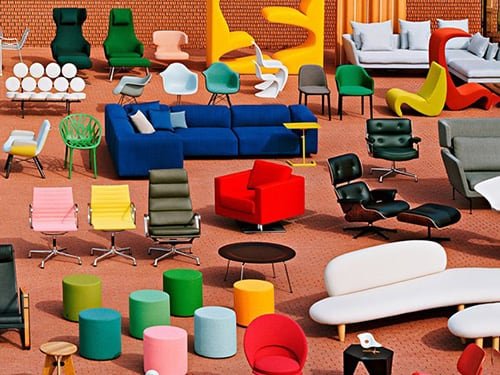
  Do you have designer furniture that no longer fits your interior, that you want to get rid of or replace. Or perhaps have a few designer pieces in your company's director's office that need to go, feel free to contact 2ECO for acquisition.

2ECO is always interested! Contact us via the contact form: send us some pictures of the models and possibly accompanying inventory. Try to map out as clearly as possible the condition of the furniture or we will come by ourselves to have a look and make you a fair offer!

VITRA

HAY

Herman Miller

GISPEN

Howe

Tecno

Stua

Knoll

Artifort

Cascando

DuPont

DeVorm

etc.

Opkoop Designmeubilair, Hermann Miller Aeron Classic
Opkoop Designmeubilair, Hay Bjorn Designsofa
Opkoop Designmeubilair, Gispen Dukdalf Kolom Table
Image

2ECO buys and sells your

Designer furniture

So what do we buy? Design Lounge chairs and armchairs, designer seats and sofas, designer chairs, stools and lounge sets unique office chairs. Also high-end designer desks and conference tables, designer dining tables, side tables and dining room sets. And also lighting fixtures, barn lamps etc.
From brands such as: Vitra, Hay, Herman Miller, Gispen, Howe, Tecno, Stua, Knoll, Artifort, Cascando, etc.
Still in doubt? Send us an email with some pictures of your furniture(s) and we will contact you a.s.a.p.!

Large or small lots

2ECO buys up from small companies and multinationals. Whether it's 2 designer chairs or 200, 2ECO is always interested!

New or used

Excess stock? After years, time for redecorating or have you just redecorated and are already in need of restructuring? 2ECO buys over!

Obsolete or recent

A-quality office and design furniture will last for years, 2ECO can certainly give your furniture a 2nd life. Especially for design pieces we are always interested!

According to fair valuation

We always provide an honest, accurate valuation and clear communication about the how and what.

Request a free valuation

IT equipment | buying up, refurbishing and selling computers, laptops, printers, etc.

IT material

Buyout and sale of IT equipment

Are you reviewing your IT infrastructure? Are you going to replace all of your computers or printers with more recent models or does all of your server cabinet need to be replaced or removed in your move?

  2ECO is happy to take over your IT equipment! We ensure that everything gets a second life in schools and non-profit organizations for whom this material is still more than sufficient! Contact us via the contact form: send us some pictures of the models and possibly accompanying inventory

Opkoop IT-materiaal, computers, laptops, gsms, printers etc.
Opkoop IT-materiaal, beeldschermen en Monitors
Opkoop IT-materiaal, serverkasten
Opkoop IT-materiaal, Multifunctionele printers scanners en copiers

2ECO buys and sells your

IT material

  Information and Communication Technology (ICT) think desktop computers, laptops, mac and windows, monitors and associated monitor arms, company mobiles, tablets, server cabinets, ethernet hubs, usb hubs, cabling, etc.
Office equipment: printers, scanners, all-in-one copiers and associated toners, laminators
Areyou still in doubt? Send us an email with some pictures of your IT equipment and we will contact you a.s.a.p.!

Secure data removal

Sensitive data? No problem. When your IT equipment begins a new life, 2ECO does the complete & secure data disposal.

Corporate Asset Buyout | buy up office furniture, industrial property, hospitality and others.

2ECO the buyer of business goods

from office, industry, warehouse, IT equipment, hospitality, retail store,...

  Will your business soon be acquired, discontinued or restructured, will you be working more hybrid, moving to a new location or is it simply time for renewal?

  2ECO is happy to buy up your used office furniture, workplace equipment, industrial machinery, warehouse equipment, industrial goods, IT equipment and hospitality equipment. We take care of sales, collection, relocation and emptying so that you are completely relieved. Among other things, we buy

In addition to your company's valuable items, 2ECO also buys up office furniture, machinery and residual goods that you don't know what to do with and that you think no longer have any value. Along with the sale of the valuable items, this method allows you to recover part or sometimes even all of the cost of your move or relocation. Thus, it is a win-win situation for all parties!

Large or small lots

2ECO buys up from small businesses and multinationals. Whether it's 2 workstations or 200, 2ECO is always interested!

New or used

Excess stock? After years, time for redecorating or have you just redecorated and are already in need of restructuring? 2ECO buys over!

Obsolete or recent

A-quality office furniture will last for years, 2ECO can certainly give a 2nd life to your furniture. Also consider designer pieces and vintage, we are always interested!

According to fair valuation

We always provide an honest, accurate valuation and clear communication about the how and what.

Since 2007, 2ECO has purchased more than
0
office furniture and business goods transferred from its customers in business clearance and moving projects

with the buyback of these goods, we were able to reduce the moving cost of each project on average by
50%-50%
we take care of all moving, dismantling and selling

Because this office furniture was still perfectly usable and thus given a 2nd life, we used it to create
±0ton
Avoided unnecessary waste in the landfill

thereby, 2ECO reduced the carbon footprint of its clients' relocation projects by over
0ton
in CO2 emissions, which is 7.8 million kgCO2e

Win-win

Many moving companies or buyers bill fees to clear your premises. However, additional costs are not what you are waiting for. That is why 2ECO works with a number of scenarios, each time in consultation and in function of the project!

Direct purchase: we buy your used equipment and you have immediate proceeds that you can use for moving and clearance costs.
Afterwards: we organize the sale and afterwards we divide the proceeds or they are deducted from the emptying and clearance costs.

This allows your company to recover some or sometimes all of the cost of the move or relocation. In some situations, you may even make a profit on your move.

Buying up office furniture and furnishings

Cabinets-Storage: file cabinets, filing cabinets, tambour door cabinets, sliding door cabinets, tambour door cabinets, office cabinets, garage cabinets
Desks-Tables: desks, canteen tables, meeting tables, work islands, sit-stand furniture, workbenches
Seating furniture: office chairs, executive chairs, refectory chairs, folding chairs, stacking chairs, conference chairs, reception chairs, seats, lounge chairs, armchairs, seating corners, stools
Office furnishings: reception furniture, reception desk, acoustic solutions, coat racks, lighting
Miscellaneous: coffee makers, office kitchen equipment,...

View Office emptying
Opkoop Kantoormeubilair, dossierkasten, roldeurkasten, schuifdeurkasten
Opkoop Kantoormeubilair, ontvangststoelen, kantinestoelen, barkrukken
Opkoop Kantoormeubilair, bureaus, workbenches, tafels en tafelbladen
Opkoop Kantoormeubilair, bureaustoelen, directeursstoelen, werkstoelen

Designer furniture

So what do we buy? Design Lounge chairs and armchairs, designer seats and sofas, designer chairs, stools and lounge sets unique office chairs. Also high-end designer desks and conference tables, designer dining tables, side tables and dining room sets. And also lighting fixtures, barn lamps etc.
From brands such as: Vitra, Hay, Herman Miller, Gispen, Howe, Tecno, Stua, Knoll, Artifort, Cascando, etc.
Still in doubt? Send us an email with some pictures of your furniture(s) and we will contact you a.s.a.p.!

Read more about buyout designer furniture
Opkoop Designmeubilair, Hermann Miller Aeron Classic
Opkoop Designmeubilair, Hay Bjorn Designsofa
Opkoop Designmeubilair, Gispen Dukdalf Kolom Table
Opkoop Designmeubilair, Maarten van Severen .03 Stoel

Buyout of industrial equipment and warehouse equipment

Storage and organization: pallet racks, stacking racks, storage systems, boxes, crates, pallets
Transportation equipment: fork elevators, forklifts, ladder elevators, vans, trucks, trolleys
Tools and machinery: ladders, workbenches, large and small industrial machines, metalworking machines, joinery
Fixtures: everything from associated office spaces, reception areas, site chain
...

View Industry emptying
Opkoop Industrie, palletrekken, stapelrekken, modulaire magazijnrekken
Opkoop Industrie, zware machines, gereedschap, industriele toestellen
Opkoop Industrie, transportmiddelen, vorkliften, heftrucks, ladderliften, bestelwagens, vrachtwagens
Opkoop Industrie, steekkarren, palletten, stapelrekken, dozen, kratten

Buying up IT equipment

Information and Communication Technology (ICT): Computers, monitors, laptops, gsms, tablets, server cabinets, etc...
Office equipment: printers, scanners, all-in-one copiers and associated toners
Incl. secure data removal

Taking over IT equipment

Buyouts in other sectors

Government: offices, offices, warehouses
Hospitality: furnishing and professional kitchen equipment
Schools: cabinets, desks, canteen, administrative areas
Other sectors: NPOs, retail, retail trade, overstocks, finishes

Business movement in other sectors
Opkoop IT-materiaal, computers, laptops, gsms, printers etc.
Opkoop Andere Sectoren, horecatoestellen, industriele ovens, diepvriezen
Opkoop Andere Sectoren, horecatoestellen en inrichting
Opkoop Andere Sectoren, tafels, stoelen, horecainrichting, kantinemeubilair
Herverkoop

What do we do with the purchased goods?

We ensure that all bought-up goods such as 2nd hand office furniture, industrial equipment and machinery, IT equipment and hospitality equipment, among others, are recirculated.

Many of these items can perfectly still get a second life or new use with individuals, companies or businesses looking for quality, ecologically sound and affordable furnishings, equipment and machinery!

We provide a custom scenario for each business emptying where we weigh how we can buy up the items in question, sell them and give them a new life and also do it in a cost-effective way for all parties!

Read more about our services

Service - Bedrijfsleegmaak, leegmaken van bedrijfspanden

Corporate Clearance

Read more
Service - Opkopen van bedrijfsgoederen, overstocks, kantoormeubilair, machines etc

Corporate asset buyout

Service - Hercirculeren, terug in omloop brengen van meubilair

Sales and Recirculation

Read more
Service - Bezemschoon opleveren van bedrijfspand

Broom clean delivery

Read more
Service - Refurbishing, heropwaarderen van gebruikt meubilair

Refurbishing

Read more
Service - Recyclage, verzorgen van afvalstromen

Recycling

Read more

Corporate emptying | 2ECO as an all-in-one solution for corporate emptying

Corporate Clearance

2ECO as a sustainable all-in-one solution

Is your business soon to be acquired, discontinued or restructured, will you be working more hybrid or moving to a new location?

  That's where 2ECO comes in! We provide a total solution for emptying your office or business premises! We ensure that all your remaining goods are bought, sold and removed and that your building is swept clean.

Emptying a business premises always brings with it the necessary headaches. There is already so much that needs to be taken care of and the company's activities often continue as usual. Moreover, a move or relocation for your business costs a lot of money and will always leave you with leftover materials.

Soon, the property should already be handed over neatly.
How will you bolster that?
Who do you put in to do that cleanup?
What do you do with all the old workshops?
What do you do with all the leftover goods?
And where to go with all the waste?

Free valuation

Why choose the sustainable

2ECO Corporate Emptying?

Companies are increasingly aware of their environmental impact and are making tremendous efforts to maintain environmentally friendly practices. The necessary emptying of offices during a move or restructuring can be quite a challenge in this regard. But with the right partner, your adjustment need not be environmentally burdensome - quite the contrary:

  2ECO provides an ECOLOGICAL TOTAL SOLUTION for your corporate emptying needs.

2ECO has been a forerunner in reuse, refurbishing and recycling of company goods for many years and is looking for new methods to reduce the ecological footprint of your company movements. 2ECO has become an established value and reference in circular buyouts and ecological removals.

View our roadmap

Conservation of basic raw materials

We provide reuse and recycling, with this we ensure that no new basic raw materials such as wood, metal and plastic are wasted in new production.

Reduce your carbon footprint.

Keep waste out of landfills and reduce your environmental impact, promote a healthier planet and help carry the message for a responsible future.

Show your commitment and boost your reputation

Show employees and customers that you are committed to ethical and ecological business practices. Our service reinforces your commitment to sustainability and can enhance your brand's credibility.

Sustainable and cost-effective

Our approach is not only environmentally friendly, but can also be friendly to your wallet. Save on disposal and landfill costs, sell used furniture and reduce operational costs. 2ECO takes care of everything!

2ECO will take over for you!

All-in-one solution

We oversee the entire emptying process:

Inventory
Buying up your office furniture and business equipment
Selling office furniture and business equipment
Recycling and management of waste streams
Emptying your premises
Broom clean delivery
2ECO certificate and report

So you no longer have to worry about further handling. We can literally take everything off your hands, and taking over your goods can significantly reduce costs or even turn a profit.

2ECO neemt uw zorgen mbt uw verhuizing over

2ECO works at lightning speed

Startup after initial interview
Finishing can be done within 24 hours
Tailored to the project
Clear communication
Also emergencies & emergency scenarios
More than 15 years of experience
Night work is possible if necessary

Everything is possible

Large or small lots
New or used
Obsolete or recent
Light or lead-heavy
From SMEs to multinationals

We always provide a customized solution!

Some examples

Office Furniture
Business inventory
IT equipment (including secure data destruction)
Machinery
Tools
Transportation Equipment
Building components

2ECO Roadmap

1. Inventory
2. Buyout: fair valuation and Takeover Offer
3. Sale, disposal, recycling
4. Empty premises
5. Clean delivery

We guide you step by step
Show you the different options
Always in consultation and with clear communication
Ensure correct, smooth handling

More details
2ECO Stappenplan voor bedrijfsverhuizing

1. Inventory

Internally, you list all furniture, items and fixtures yourself
Or by 2ECO, we come on site to compile an inventory of everything in your business

2. Valuation and takeover bid

Goods in inventory are selected by 2ECO on the following reusability criteria:
Repurposability at the new location = extension of lifespan within the own organization, whether or not after refurbishing or with slight modifications.
Resale on the local market = life extension with small carbon footprint.
Reusability of certain parts, such as desk tops or bases, possibly refurbishing.
Re-usability through export (avoiding traps like dumping and high carbon footprint due to transport).

3. Sale, disposal and recycling

Acquired goods are traded on site or transported as efficiently as possible (e.g., tables disassembled, optimization of truck trips, etc.)
Remaining goods and waste streams are already sorted for recycling qualities on site and disposed of accordingly according to VLAREMA 8 regulations

View waste streams

4. and 5. Emptying and broom clean delivery

Empty last residuals and final cleaning without use of chemically harmful products and broom clean delivery.

Read more about our services

Service - Bedrijfsleegmaak, leegmaken van bedrijfspanden

Corporate Clearance

Service - Opkopen van bedrijfsgoederen, overstocks, kantoormeubilair, machines etc

Corporate asset buyout

Read more
Service - Hercirculeren, terug in omloop brengen van meubilair

Sales and Recirculation

Read more
Service - Bezemschoon opleveren van bedrijfspand

Broom clean delivery

Read more
Service - Refurbishing, heropwaarderen van gebruikt meubilair

Refurbishing

Read more
Service - Recyclage, verzorgen van afvalstromen

Recycling

Read more

Sectors | 2ECO operates in emptying and buying out of office, industrial, IT, hospitality etc.

Our sectors

  Is your business soon to be acquired, discontinued or restructured, will you be working more hybrid or moving to a new location? Are you looking for someone to vacate and prepare your premises for completion and/or take over your leftover goods?

  2ECO has a solution for every scenario. Whether it's office premises with just a few or just hundreds of pieces of office furniture, industrial workshops with lead-heavy machinery or warehouses with hundreds of running meters of stock or catering establishments with professional kitchen equipment and furniture or maybe you want to get rid of your old IT equipment. Perhaps you still have unique designer furniture that we can take over? 2ECO gets the job done and does not shy away from tight deadlines or night work

Placeholder Image

Office

All-in-one solution for emptying your office building; buying and selling your office furniture and office equipment, clean delivery, interim storage, etc. 2ECO takes care of everything! In addition, we can also take care of furnishing your new premises and refurbishing and assembly of office furniture.

View options
Placeholder Image

Industry

2ECO provides a complete company emptying; buying and selling warehouse, workshop and industrial furniture and fixtures. 2ECO takes care of a spotless delivery whether it concerns light or heavy industrial machinery or transport equipment, we have a solution

View our solutions
Placeholder Image

Designer furniture

2ECO buys over your original designer furniture and gives everything a second life. Think furniture by VITRA, HAY, GISPEN, HOWE, TECNO, STUA, KNOLL, ARTIFORT and designs by designers such as Maarten van Severen, Harry Bertoia, Eames, etc.

Details about buyout Design Furniture
Placeholder Image

Other Sectors

Emptying and customized buyouts of all possible other sectors: catering with professional kitchen equipment, government departments with deadlines and specific requirements, non-profit organizations, schools, retailers with overstocks and stocks,... We always work out a customized proposal!

Custom solutions
Placeholder Image

IT material

Buyout and collection of professional IT equipment; desktop computers, laptops, keyboards, printers, copiers, server cabinets etc. We also provide secure data disposal before giving your IT equipment a second life.

Details on buyout IT

Contact | Free honest valuation or general questions

Contact

Contact

Contact

Fill in this form with no obligation

You will get an answer from us within 24 hours
Tailored to your project
Also emergencies & emergency scenarios

    I am inquiring i.e.*
    A relocation/clearance of business premisesBuying out my business assetsI am interested in purchasing furniture or project furnishings from 2ECOOther...

    I inform as*

    Would you also like to receive promos and info from our other departments?
    2ECO Sales: sales channel 2nd hand, refurbished and circular office furniture for individuals and SMEs.

    2ECO Projects: Portal for refurbished, pre-owned and circular office furniture for project design, architects and design firms.

    (Feel free to send us an additional email at info@2eco.be if you would like to send multiple or larger attachments, such as a list and/or photos of the company's assets or location.)
    2ECO Contact

    Contact us directly

    Administrative headquarters

    2ECO BV

    Lijkveldestraat 23b
    9170 Sint-Gillis-Waas
    Company number:
    BE 0736.390.445

    Sale and Recirculation | put back into circulation used office, industrial, IT and hospitality goods

    Sales and Recirculation

    Commitment to the local market

    2ECO is contacted on a daily basis by companies, governments, schools and moving companies to buy up large and small lots of used office furniture, industrial goods, IT equipment and material from other sectors that can perfectly still get a 2nd life or new application.

    2ECO brings bought-up used material back into circulation through various channels.
    Through staff sales, we first offer employees of the company where the furniture comes from the chance to buy quality pieces in a secure online environment.
    This is followed by auctions at the project site, or sales from our warehouses: through our webshop with direct sales to individuals and SMEs or in larger volumes for circular project design

    More and more companies and individuals are choosing 2nd hand and/or refurbished office furniture and industrial goods when they need to furnish their premises or home office. Both ecologically and economically, 2nd hand is the ideal choice. Especially since we always deal with professional A-quality material that can easily get a second life! So you do not compromise on quality but you do win on price and reduce your ecological footprint!

    Still not convinced? Check out some quick figures

    Imagine an office with 100 employees moving to new premises that are:

    100 desks, 100 desk chairs, 100 drawer pedestals and 100 computers
    a lot of filing cabinets, printers and IT equipment, conference tables and chairs
    canteen furniture, reception furniture etc.

    Previously, this all went integrally into the landfill. 2ECO has therefore been at the forefront of recirculating these goods since 2007!

    Since 2007, 2ECO has bought and sold more than
    0
    Second-hand office and industrial goods

    Because we were able to give these goods a 2nd life, we avoided, in the first place
    ±0ton
    To needless waste in the landfill

    And as a second positive effect, we thereby also avoided the need for production of new goods and saved together
    0ton
    in CO2 emissions, which is 7.8 million kgCO2e

    Should you still not be convinced of the positive ecological impact alone, consider that buying 2nd hand and refurbished also has an average

    30%-30%
    cheaper than new!
    2ECO BV Magazijn
    Image

    Auction

    Some of the furniture is sold by 2ECO through online auctions where the material is ideally picked up on site at the business to be vacated to minimize the carbon footprint of transportation.

    If this does not fit the company's time schedule or requirements, auction lots will be stored and collected in our own warehouses.

    2ECO Sales Toonzaal
    Image

    Online shop

    The finest, best and re-rated pieces are on display in 2ECO Sales' showroom and are posted on 2ECO Sales' web shop where both individuals and businesses are sold.

    With this, we bring A-quality office furniture to our customers for a 2nd or 3rd life at very economical prices.

    Webshop 2ECO Sales
    2ECO Projects Banner
    Image

    Project design

    Larger lots will eventually run through our newest project 2ECO Projects. This channel will serve as a platform for project developers, design firms and architects to furnish projects with fully responsible 2nd hand, refurbished and circular furniture without having to compromise on looks or quality. Now, of course, this can still be done through 2ECO itself.
    Image

    Staff Sales

    Give used materials a second life within your own team - quickly, circularly and effortlessly.

    2ECO offers companies a digital solution to offer internal furniture to employees before the public can access it. Through a protected webshop, staff members can purchase items at bargain prices.
    Inventory, payments, administration and shipping? Everything is taken care of by 2ECO.

    No more internal chaos - no more loose emails or Excel files
    Save time for facility teams - we do the work
    Secure & transparent - all orders through a secure web shop
    Sustainable & social - furniture gets a second life with own people

    Your employees thus get a unique opportunity to purchase quality furniture, and you show yourself as an employer committed to sustainability, circularity and commitment.

    See all options

    Read more about our services

    Service - Bedrijfsleegmaak, leegmaken van bedrijfspanden

    Corporate Clearance

    Read more
    Service - Opkopen van bedrijfsgoederen, overstocks, kantoormeubilair, machines etc

    Corporate asset buyout

    Read more
    Service - Hercirculeren, terug in omloop brengen van meubilair

    Sales and Recirculation

    Service - Bezemschoon opleveren van bedrijfspand

    Broom clean delivery

    Read more
    Service - Refurbishing, heropwaarderen van gebruikt meubilair

    Refurbishing

    Read more
    Service - Recyclage, verzorgen van afvalstromen

    Recycling

    Read more